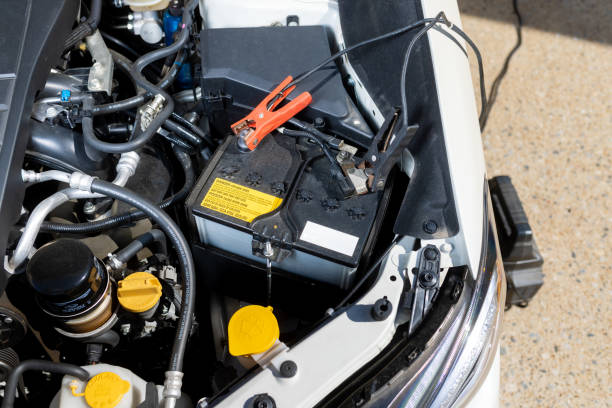
Beginning your day with an engine that isn’t starting is a nightmare, especially when getting to school or work. We can identify many car components to find out why your car doesn’t start after you switch your ignition switch to turn on the button. The most frequent reason for this unfortunate event is the automobile battery drained over a few hours.
The car battery is responsible for supplying energy to start the engine. If the battery in your car is empty, it won’t be able to provide the power required to start the engine.
But a drained battery doesn’t mean it’s time to get a new one. There are various reasons for an automobile battery to lose charge overnight that can be addressed in a couple of easy steps.
Components left open
One of the main reasons for a depleted car battery is human error. We often forget to switch off a vehicle component when we leave the vehicle because we’re exhausted working. There are instances in which we don’t realize that the car’s light has been running, particularly in the bright light, making it difficult to see them.
Leaving a car component in the open for an extended period, even when the engine is off will result in the battery losing battery charge overnight. However, newer production vehicles usually have an alarm system that alerts you when you’ve left a component open before leaving the car.
Make sure to switch off all lights before leaving your vehicle.
Parasitic DrainParasitic drain is yet another frequent reason for reason why a car battery fails throughout the night. It happens because it will continue to discharge the battery, even after turning it off.
Your car battery is running some components even though the engine is shut off, such as the anti-theft feature and clock. Parasitic drain happens when the battery sends signals to another part that isn’t supposed to be charged once the engine has been shut off.
It can result from a combination of various factors, including the most common cause: the habit of leaving the headlights, lights for the glove box, or cabin lights on all night. Faulty fuse wires, bad wiring, or poor installation of a brand-new car battery can also cause the drain of parasitic fluid.
Extreme temperature
Cold weather can harm your car’s battery, even if you only leave it for a few hours. If a car’s battery is exposed to cold for long periods, the chemical reactions in the storm will slow down. Inputting the battery in cold temperatures for a long time will result in chemical reactions ceasing altogether.
It is also possible for hot weather to affect the battery in your car. If temperatures reach a high, it will evaporate the chemical in your battery, which will quickly drain it. Therefore, it is recommended to ensure that your vehicle is in a cool, well-ventilated room in an area with extreme temperatures.
A voltage measurement for the car battery is usually between 12.6 to 12.8 Volts.
A faulty alternator
Alternators are fitted in cars to power the electrical system when the engine is switched on. They are driven by the crankshaft connected to the serpentine belt. Another purpose of an alternator is to charge the battery when ignited. If your vehicle has a weak alternator, it may drain your battery because it’s not set correctly.
The short distances you drive can be an issue that drains the battery. The alternator takes time to charge your vehicle’s battery following ignition. Therefore, short journeys can damage your battery as it won’t fully recover. It is recommended to leave your car running for a minimum of 10 minutes following an unplanned trip to prevent your battery from dying overnight.
Age
If the battery in your car needs replacement, then it will eventually be depleted overnight, even after several charges. Car batteries function like cellphone batteries. With time, your phone battery will lose energy faster than when you bought it, which signifies that it needs replacement.
In general, you should replace your battery in the car at least every 3 to 4 years. Some might even last age of five to six years, depending on your usage and the number of accessories you’ve installed on your vehicle. If you drive your car past the lifespan of the battery of your, the car will cause a continuously depleted battery.
If the battery in your car needs replacement, take the necessary steps to avoid problems in getting the engine started.
How do you repair an automobile battery that dies overnight
If your car doesn’t start, it may mean that the battery in your vehicle is depleted. It is possible to jump-start it using electricity sources like an electric jump starter that you can carry around or a quality battery from a different vehicle.
Attach the clamp on the positive side of your drained battery to utilize the portable jump starter after connecting to the opposing end. Switch on the portable jump starter, and start your car within one or two minutes.
To jump-start your car using another’s battery, it is necessary to be equipped with jumper cables. The first thing to do is turn off your engine in the vehicle using a reliable battery. Then join the negative clamp with the positive end of your depleted battery and connect it to the new battery.
Next, connect the clamp on the negative side to the terminal that is negative of your good battery. Connect another end of the clamp to a grounded, unpainted metal inside your vehicle with an uncharged battery.
Start your car using a good battery to recharge the storm that is drained. After a minimum of one minute, you can begin the vehicle using an empty battery, and it should start working.
Ensure your car’s battery is in good shape to avoid the costly cost of replacement.
If your vehicle’s battery has been running for about four years, it might indicate that it is time for a replacement. A replacement car battery from the Philippines costs about Php 5,500, based on the type of battery you select. However, if you’ve just changed your car battery, this could be because you didn’t turn off the light for a long time, causing it to run out of power.